How to Socialize Your Bully Puppy the Right Way
Learn how to socialize your American Bully puppy with a practical step-by-step plan that builds calm confidence, better manners, and safer real-world behavior.
How to Socialize Your Bully Puppy the Right Way
When I brought home my first American Bully, a blocky little male I named Tank, I was so proud of him I wanted to show him off to everyone. I took him to a dog park at nine weeks old. I let strangers rush up and pet him. I let kids shriek and grab at his ears. I thought I was socializing him. I was not. I was overwhelming him, and I was setting the foundation for a nervous, reactive dog.
It took me a while to understand what socialization actually means, and once I did, everything changed. My second Bully, a female named Roux, went through a real, structured socialization plan starting the day I brought her home at eight weeks. She is now three years old and one of the most confident, relaxed dogs I have ever been around. She walks into vets' offices like she owns the place. She ignores barking dogs on the street. She lets children approach her calmly and she stays calm right back.
That difference is entirely because of how those first few months went. Socialization is not just exposing your puppy to things. It is exposing them to things in a way that builds confidence instead of fear. Get it right and you have a dog people admire. Get it wrong and you spend years managing anxiety and reactivity in a sixty-pound muscle machine that the public is already nervous about.
This guide covers everything I know about socializing an American Bully puppy the right way, from the first week home through the end of the juvenile period. I am writing this the way I wish someone had explained it to me with Tank.
Why Socialization Matters More for Bully Breeds
Every puppy needs socialization, but the stakes are a little higher with an American Bully. Not because the breed is inherently dangerous, because it is not. But because of how the public perceives dogs that look like ours. A Golden Retriever can be reactive at a farmer's market and people think it's quirky. A Bully that lunges and barks is a news story waiting to happen.
Beyond the optics, Bullies are physically powerful dogs. A reactive, fearful Bully can cause real accidents even without any aggressive intent. A dog that panics and bolts can drag you into traffic. A dog that does not know how to read other dogs can get into fights that do serious damage. Socialization is not just about manners. It is about safety for your dog, for you, and for everyone around you.
American Bullies also tend to be very human-focused dogs. They love people deeply. When that is paired with good socialization, you get the confident, friendly breed ambassador that Bully owners know and love. When it is not, that same attachment can turn into over-excitement or even anxiety around strangers, which looks a lot worse than it is but is still a problem you will have to manage every day.
The Socialization Window: Why Timing Is Everything
Puppies have a critical socialization period that runs roughly from three weeks to around fourteen weeks of age. During this window, their brains are wired to accept new experiences as normal. After the window closes, it gets harder and harder for them to accept things they have not seen before without showing some stress.
Most people bring their puppies home at eight weeks, which means you have about six weeks of prime socialization time before that window starts to narrow. That is not a lot of time. And it overlaps with the period when your puppy is not fully vaccinated, which makes a lot of new owners freeze up and keep their puppy home to stay safe.
Here is what I tell everyone in that situation: the risk of your puppy developing behavioral problems from lack of socialization is real and documented. The risk of disease, while also real, can be managed with smart exposure. You do not have to take your unvaccinated puppy to a dog park. But you can carry them to busy sidewalks. You can invite vaccinated, healthy dogs over to your yard. You can sit outside a hardware store and let your puppy watch the world go by. There are ways to socialize safely during the vaccine gap, and a good vet will support you in finding them.
Week-by-Week Socialization Plan
Weeks 8 to 10: Foundation at Home
Your puppy just left its mother and littermates. It is overwhelmed. Your job right now is not to expose it to as much as possible. Your job is to build a sense of safety and trust with you.
- Let your puppy explore the house at its own pace. Do not force it into rooms or situations it hesitates around.
- Handle it gently every single day. Touch its paws, ears, mouth, and tail. Make this positive with treats and calm praise. You are building a dog that tolerates vet exams and grooming without a fight.
- Introduce it to different surfaces: carpet, hardwood, tile, grass, concrete. These all feel different under their paws and puppies that only ever walk on one surface can actually be startled by unfamiliar textures later.
- Play recordings of thunder, sirens, city noise, and babies crying at very low volume while your puppy is eating or playing. This desensitizes them to sounds without overwhelming them.
- Invite calm, healthy, vaccinated adult dogs into your home or yard if you can. Watching a steady adult dog navigate a space calmly teaches your puppy more than you can.
Keep outings short. Carry your puppy to places where the ground is less of a contamination risk, like a friend's clean yard or a quiet parking lot. Let them watch the world without demanding they interact with it.
Weeks 10 to 12: Expanding the World
By now your puppy has its second round of vaccines and a bit more resilience. This is when I really start pushing the exposure, but always in a controlled way.
- Start visiting pet-friendly stores like Petco or Tractor Supply. These places have shopping carts you can put your puppy in if the floor feels risky, and they have the bonus of strangers who are already dog-friendly asking to pet your pup.
- Visit a friend's house with well-behaved children. Let the kids approach calmly. Teach them how to offer a hand before grabbing. This is as much about training the humans as it is about training your dog.
- Introduce your puppy to different types of people: men with beards, people in hats, people with umbrellas, people in uniforms. Dogs generalize poorly, meaning a puppy that only meets clean-shaven people in casual clothes can be nervous around anyone who looks different.
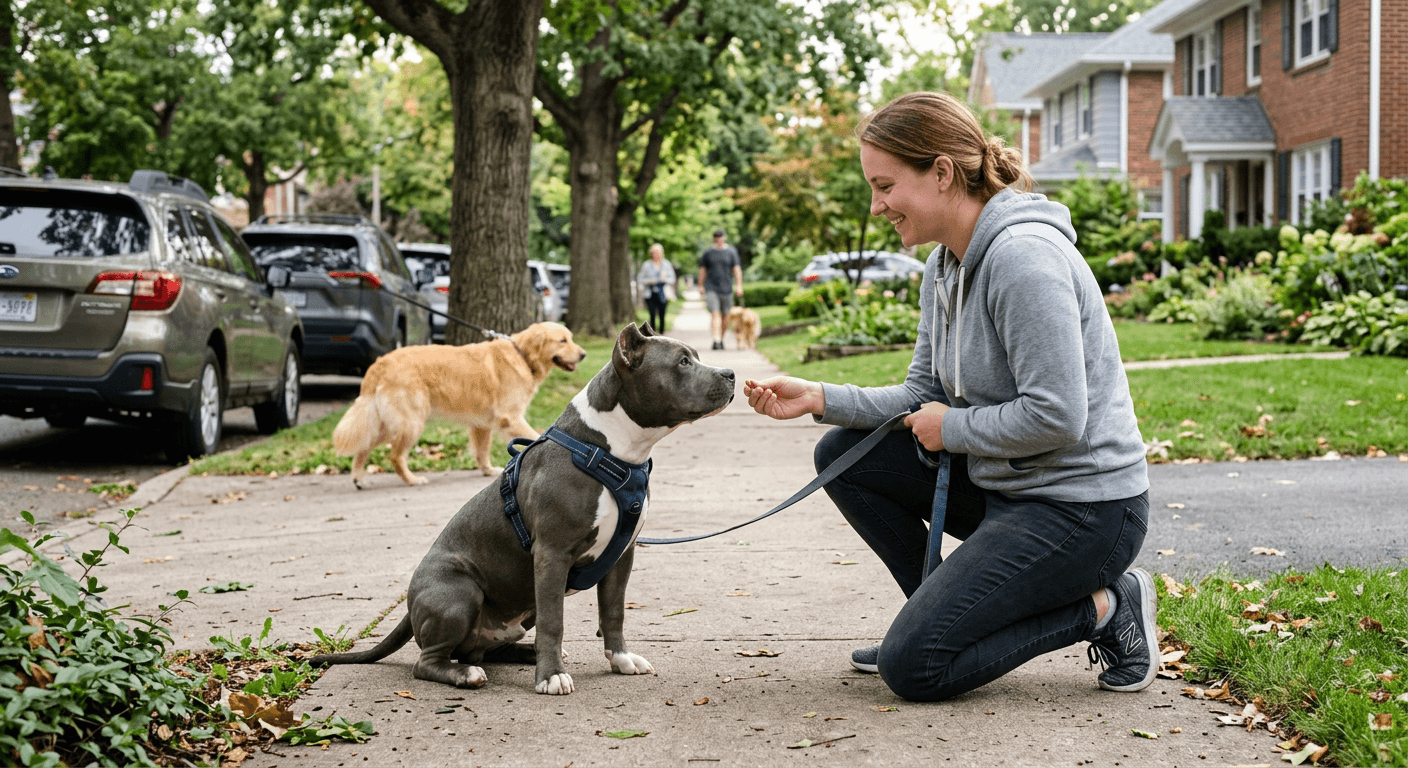
- Start short leash walks in quiet neighborhoods. Let your puppy sniff. Do not rush them. Sniffing is how dogs process the world, and on a walk, it is the point.
- Practice being around other dogs on leash at a distance. Do not force greetings. Just let your puppy see other dogs existing calmly and pair that sight with treats.
Weeks 12 to 16: Controlled Social Experiences
This is the final stretch of the critical window and you want to push volume here while keeping quality high. More experiences, still controlled.
- Puppy classes are gold during this period. A well-run class gives your puppy structured play with other dogs, exposure to a new environment, and the beginning of basic obedience, all at once. Look for classes run by trainers who use positive reinforcement methods.
- Take your puppy to outdoor markets, patios, and dog-friendly events. Work on sit, eye contact, and calm greetings while the world moves around you.
- Introduce car rides if you have not already. Start in a parked car with treats. Work up to short trips. A dog that hates the car is a dog that hates vet visits, which makes your life harder forever.
- Practice being left alone for short periods so your puppy learns that your absence is not a catastrophe. Separation anxiety is real and painful for Bullies, who bond so hard to their people.
- Begin exposing your puppy to skateboards, bikes, strollers, and other moving objects. These are common triggers for reactive dogs. Getting them comfortable now is much easier than working through reactivity later.
Months 4 to 6: Maintaining Momentum
The critical window has closed, but the work is not done. Adolescence starts around five or six months and dogs can regress during this period. Keep socializing. Keep the experiences positive. Keep your training consistent.
This is also when you will start noticing your Bully getting stronger and more confident. Now is the time to really lock in leash manners. A dog that pulls at fifteen pounds is annoying. A dog that pulls at sixty pounds is dangerous.
Common Socialization Mistakes (I Have Made Most of Them)
Forcing Interactions
If your puppy is hesitating, backing away, or showing any sign of stress, do not push them into the situation. This is the most common mistake I see. People carry their puppy up to a scary thing and hold them there thinking they are helping the dog get over it. What actually happens is that the dog learns that scary things are unavoidable and that you will not protect them. That is the opposite of what you want. Let your puppy approach scary things on their own terms with you as a steady anchor.
Relying on the Dog Park
Dog parks are chaos. Unvaccinated dogs, unknown behavior histories, no supervision, and high arousal. They are not a socialization tool. They are a place where well-socialized adult dogs go to run. Do not use a dog park to socialize your puppy. You have no control over who approaches your dog or how they do it.
Skipping the Fear Periods
Puppies go through natural fear periods, usually around eight to ten weeks and again around six to fourteen months. During these windows, even something they have seen a hundred times can suddenly seem terrifying. When you hit a fear period, dial it back. Keep outings calm and familiar. Do not push new exposures. Just maintain what they already know and wait it out. These periods pass.
Socialization Without Training
Socialization and training go together. A puppy that has met a hundred people but has no impulse control is going to jump on every one of them. Pair your socialization outings with sits, stays, and eye contact training. The more your dog can check in with you in distracting environments, the more reliably they will listen when it actually counts.
Doing It All in the First Month and Stopping
Socialization is not a checklist you complete and cross off. It is a lifestyle for the first two years. Dogs that are heavily socialized as puppies and then kept mostly at home during adolescence can still develop reactivity and fear. Keep getting your dog out into the world regularly throughout their first two years of life.
Safety Tips for Socializing a Bully Puppy
- Keep all greetings short and positive. A puppy that gets overwhelmed and snaps or yelps during a greeting will carry that association. Two minutes of calm petting is better than ten minutes of too-much-excitement.
- Watch your puppy's body language constantly. Yawning, lip licking, whale eye, stiffness, and tucked tail are all stress signals. When you see them, create distance and give your puppy a break.
- Do not let strangers rush your dog. You are allowed to say "please let him approach you." Teach your puppy that you will manage the situation. This builds trust.
- Use a harness for outings until your leash manners are solid. A puppy lunge can torque a neck on a collar. A well-fitted harness gives you control without the risk.
- Bring high-value treats to every socialization outing. Real meat, cheese, or commercial training treats. You want to pair every new or potentially scary experience with something your dog finds irresistible.
- Stay calm yourself. Dogs read us constantly. If you are tense on the leash, your dog feels it. Breathe. Loosen the leash. Act like the situation is no big deal, and your dog is more likely to agree with you.
Neighborhood Etiquette for Bully Owners
I want to address this directly because it matters and not enough people talk about it. You are not just representing your dog when you are out in public. You are representing the breed. The reality we live in is that Bullies and Pit-type dogs are still feared and misunderstood by a big chunk of the population. How you conduct yourself in your neighborhood shapes how people in that neighborhood feel about dogs that look like yours.
- Always pick up after your dog. Always. No exceptions. People who do not like Bullies will use any excuse to complain, and a pile of poop is an easy one.
- Do not let your dog approach people or other dogs without asking. "Is it okay if my dog says hi?" takes two seconds and avoids a hundred problems. Some people are scared. Some dogs are reactive. Ask first.
- Keep your dog under control at all times. If your recall is not solid, keep your dog on leash. If your leash manners are not solid, work on them before doing high-traffic walks. An out-of-control Bully terrifies people even when the dog is being friendly.
- Be an ambassador, not a defender. When someone asks nervously about your dog, be warm. Tell them how gentle they are. Let them make their own choice about interacting. Do not lecture people for being cautious about a breed they have been taught to fear. Just show them something different.
- Know the leash laws in your area and follow them. This is not just about safety. It is about not giving animal control a reason to notice your dog.
Handling Fear and Reactivity Setbacks
Even with the best socialization plan in the world, you are going to hit bumps. A dog charges your puppy at the park and your pup gets scared. A kid falls down near your dog and screams and your dog panics. Something happens and your puppy starts reacting to things it was fine with before. This is normal. Here is how to handle it.
Do Not Flood the Dog
Flooding is the idea that if you just expose a fearful dog to enough of the scary thing, they will get over it. Sometimes it works. Often it backfires badly and makes the fear worse. If your dog is scared of men in hats, the answer is not to stand in front of a hat store until your dog stops reacting. The answer is to find a distance where your dog can see a man in a hat and still take treats, and work from there.
Use Counter-Conditioning and Desensitization
Counter-conditioning means pairing the scary thing with something great, like treats or play, until the dog starts to associate one with the other. Desensitization means starting with a version of the scary thing that is easy to handle, like very low volume thunder sounds or a hat at fifty feet, and working up gradually. Together these are the two most effective tools for working through fear and reactivity.
Find a Trainer Who Understands the Breed
If your puppy is showing significant reactivity or fear, find a trainer who has real experience with Bully breeds and uses positive reinforcement methods. Avoid anyone who talks about dominance, who recommends alpha rolls, or who wants to correct fear with a prong collar or e-collar. Punishing a scared dog makes scared dogs worse. It also, in some cases, pushes dogs into defensive aggression. You want a trainer who will work with the dog's emotions, not against them.
Be Patient and Consistent
Behavioral change in dogs is slow. If you see improvement over weeks and months, you are succeeding even if it does not feel like it. Keep showing up. Keep making outings positive. Keep rewarding calm behavior. Your dog is paying attention even when it does not seem like it.
Recommended Gear for Socialization Outings
- Front-clip harness for better control without neck strain, especially during the pulling phase
- Six-foot leather or biothane leash that will not cut into your hands if your dog lunges
- A treat pouch clipped to your waist so treats are always accessible without digging through a bag
- High-value training treats, small and soft so they can be delivered quickly: chicken, string cheese, hot dog slices, commercial training treats like Zuke's minis
- A mat or place board that travels with you so your dog has a familiar station to settle on in new environments
- Collapsible water bowl for longer outings, especially in warm weather
- A comfortable, well-fitted collar with ID tags that stays on even when the harness comes off
- Poop bags, always, without fail
What Good Socialization Actually Looks Like
I want to paint a picture of what you are working toward because it helps to know what the goal looks like.
A well-socialized American Bully walks into a new place and looks around with curiosity, not fear. It notices strangers and wags. It hears loud noises and glances at them without bolting. It meets other dogs politely and then moves on without obsessing. When something genuinely startles it, it recovers quickly and looks to you for guidance instead of spiraling into panic. It can be handled by strangers, by vets, by groomers. It is the kind of dog people stop on the street to admire.
That dog does not happen by accident. It happens because someone put in the work during those first few months and kept that work up through the dog's second birthday. It is genuinely one of the most rewarding things you can do as a dog owner, watching a puppy grow into that kind of confident, settled adult.
You can do this. The fact that you are reading a long article about socialization instead of just winging it tells me you already have what it takes.
Frequently Asked Questions
When is it too late to socialize my American Bully?
It is never truly too late, but it does get harder after the critical window closes around fourteen to sixteen weeks. An adult dog that was not properly socialized as a puppy can absolutely improve with consistent counter-conditioning and desensitization work, but the process is slower and you will likely always be managing some level of reactivity rather than eliminating it. If your dog is already an adult with fear or reactivity issues, a professional trainer who uses positive methods is your best investment. Do not give up, but also set realistic expectations. You may be working toward management, not a cure.
My Bully puppy is scared of men. What do I do?
Fear of men is actually one of the most common fear presentations in dogs, and it is very workable. Start by identifying your dog's threshold, the distance at which it can see a man and still take treats and act relatively normally. Work from there. Have calm male friends ignore your dog completely while dropping high-value treats on the ground near themselves. Let your dog choose to approach. Do not let the man reach for your dog. Let your dog do all the moving. Over time, most dogs generalize enough positive experiences with men to stop reacting. The key is patience and never forcing the interaction.
Can I use a dog park for socialization once my Bully is fully vaccinated?
I would be cautious. Not because of your dog, but because you have no control over who else is at the dog park or how their dogs behave. American Bullies can be targeted by other dogs because of their body language and confidence, and a bad fight at a dog park can set back your dog's social behavior significantly. If you want off-leash social time with other dogs, I recommend setting up playdates with dogs you know, or finding structured playgroups through a trainer or daycare. These give you controlled, supervised interaction without the chaos of an open park.
How do I teach my puppy to greet people politely instead of jumping?
The simple rule is: four on the floor gets attention, two in the air gets nothing. The moment your puppy jumps, cross your arms, turn your back, and ignore completely. The moment all four paws hit the ground, mark it with a "yes" and deliver a treat. Ask strangers who want to pet your puppy to follow the same rule. Consistency from everyone is what teaches this, and it takes a while. Keep treats on you during all socialization outings and reward every calm greeting. A sit for greeting is the gold standard and totally achievable with repetition.
My puppy was well socialized and now at six months he is suddenly scared of things he used to be fine with. Is this normal?
Yes, completely normal. Dogs typically go through a second fear period somewhere between six and fourteen months. It hits different dogs at different times and with different intensity. During this period, your dog may suddenly be spooked by things that never bothered it before, or things it has seen a hundred times. The worst thing you can do is flood them or force them through it. The best thing you can do is temporarily reduce the intensity of your outings, keep things familiar and positive, and wait it out. It usually passes within a few weeks. Just keep showing up for your dog and keep the experiences good. They will come back out the other side.
Should I use a muzzle during socialization outings?
A basket muzzle is a tool, not a punishment, and there is absolutely nothing wrong with using one if it helps you feel safer and more relaxed during outings with a puppy whose behavior is still unpredictable. That said, muzzle training should happen at home first so the muzzle itself is not a source of stress. Condition your puppy to the muzzle with treats before you ever use it on an outing. Never put a muzzle on a panicking dog for the first time. If your puppy is doing real bite work during play or is showing signs of genuine aggression rather than just puppy rowdiness, get a trainer involved before the muzzle becomes a long-term workaround.
How many socialization outings per week is enough?
During the critical window from eight to sixteen weeks, I aim for at least four or five meaningful exposures per week. These do not all have to be big outings. A ten-minute sit on the porch watching the street go by counts. Carrying your puppy to the mailbox and letting a neighbor scratch its ears counts. A structured playdate with one other dog counts. What you want is variety and volume, lots of different experiences over many short sessions, rather than one massive outing per week. After sixteen weeks, keep up at least three or four outings per week through your dog's first birthday, then maintain a regular presence in public places throughout the adolescent period.
Roux is sleeping at my feet as I write this. She will go to my nephew's baseball game this weekend and sit under the bleachers while forty kids run around screaming, and she will not care even a little bit. She will get stopped by probably six strangers who want to pet her, and she will wag and take the attention and then settle right back down when I ask her to.
That is who she is. It is also who we made her. And if you are reading this with a blocky little puppy asleep in your lap right now, that is exactly who you can make yours too.
Get out there and do the work. Your dog is counting on you.