How to Introduce Your Pitbull to Other Dogs (Without Drama)
Step-by-step guide on how to safely introduce your pitbull to other dogs using parallel walks, body language reading, and proven techniques from an actual bully breed owner.
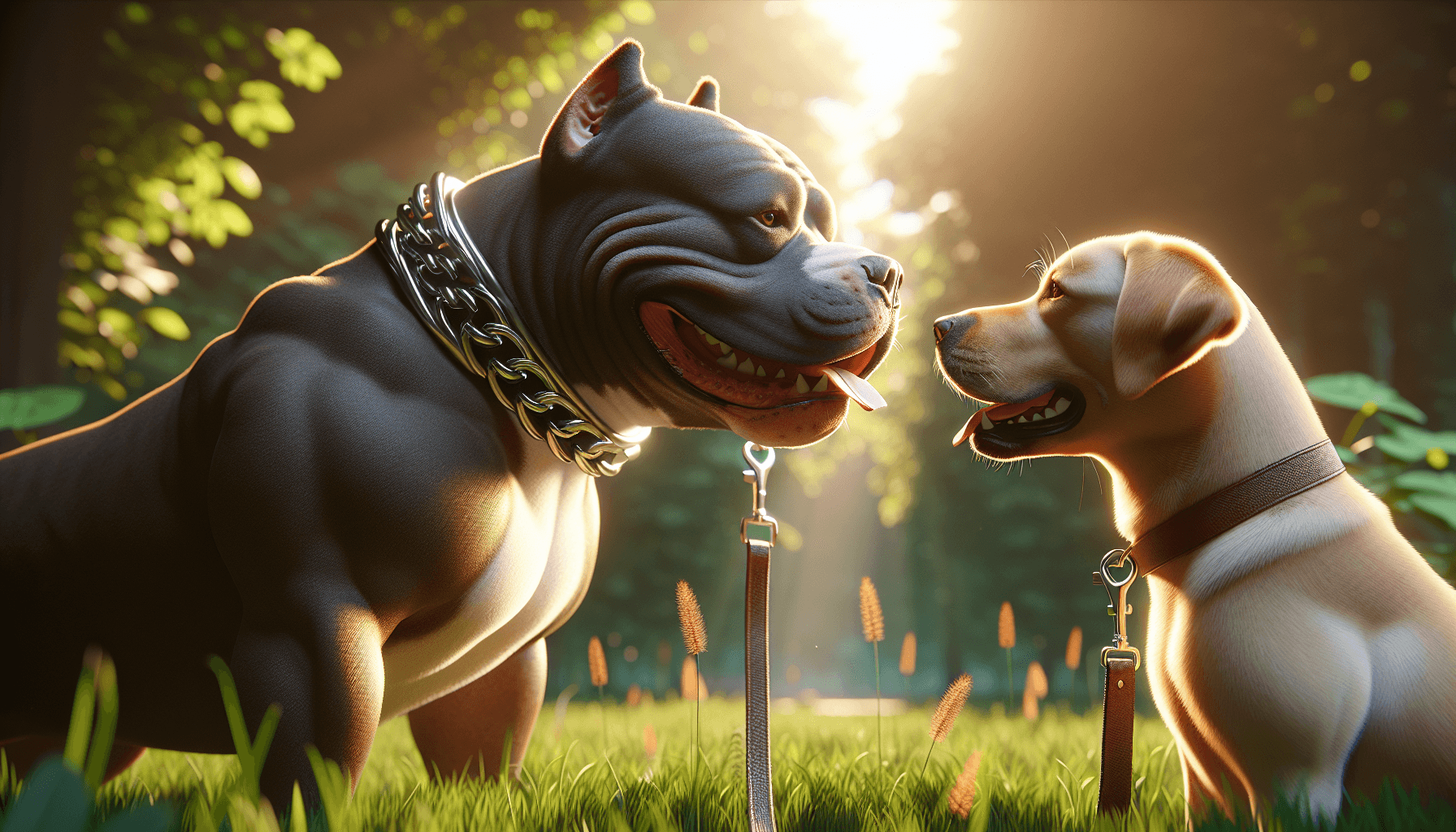
Let me be honest with you. The first time I tried to introduce my American Bully to my neighbor's Labrador, it did not go well. Not because my dog was vicious or dangerous. It went badly because I had no idea what I was doing.
I walked up, let them sniff noses immediately, and within seconds both dogs were stiff-legged and growling. I yanked my dog back, the neighbor yanked hers, and we both walked away embarrassed. Classic rookie mistake.
Since then, I've done a ton of research, talked to trainers who specialize in bully breeds, and most importantly, I've practiced. A lot. Now my Bully does well with new dogs when we take our time. It's not magic. It's method.
Here's everything I've learned about introducing pitbulls and bully breeds to other dogs without turning it into a disaster.
Why Bully Breeds Need Extra Attention During Introductions
First, let's address the elephant in the room. Pitbulls and American Bullies aren't inherently dangerous to other dogs. That's a myth that frustrates every responsible bully owner I know. But they do have traits that require us to be more thoughtful about how we handle dog-to-dog meetings.
Bully breeds were historically bred for gameness, which is a kind of focused, persistent drive. This doesn't mean aggression toward people or even other dogs, but it does mean they can be more reactive than, say, a Golden Retriever. They tend to go from zero to one hundred faster, and once they're in that heightened state, it's harder to get their attention back.
They're also physically powerful. A 70-pound American Bully who gets into a scuffle is going to cause more damage than a 15-pound Poodle in the same situation, even if the Poodle started it. That's just physics.
So we have extra responsibility. Not because our dogs are bad, but because we need to set them up for success in a world that's already watching us closely.
Before You Introduce Anyone: Know Your Dog
Before you put your pitbull in any meet-and-greet situation, you need to have an honest conversation with yourself about where your dog is right now.
Is Your Dog Dog-Reactive?
Dog-reactive means your dog has an over-the-top reaction to other dogs, barking, lunging, whining, or going completely bonkers on leash. This is different from dog-aggression. Reactivity is often fear or frustration, not a desire to actually fight. But it makes introductions much harder.
If your dog is reactive, you should work with a professional trainer before attempting introductions in close quarters. There's no shame in this. Reactivity is common and very trainable. But skipping this step and hoping for the best is how dogs and people get hurt.
Does Your Dog Have a History?
Has your dog had any serious incidents with other dogs? I'm not talking about normal puppy roughhousing. I mean real bites or attacks. If yes, you need professional guidance before doing introductions on your own. Full stop.
If your dog has never had a serious incident but is just a bit intense or rude with other dogs, that's very manageable with the right approach.
What's Your Dog's Training Foundation Like?
Does your dog know "leave it"? Can you get their attention back when they're distracted? Will they sit or down on command even when they're excited? The stronger your training foundation, the smoother introductions will go. You don't need perfect obedience, but having some reliable tools in your pocket makes a huge difference.
The Golden Rules of Dog-to-Dog Introductions
These aren't suggestions. Every trainer I've talked to who works with bully breeds comes back to the same core principles.
Neutral Territory Only
Never introduce dogs on your property or the other dog's property. Home turf triggers territorial behavior. It doesn't matter how friendly your dog is normally, introducing a stranger in their space changes the dynamic completely.
Pick somewhere neither dog has been before. A park they don't usually go to, a quiet street in a different neighborhood, an empty parking lot. Neutral ground levels the playing field.
Parallel Walks First
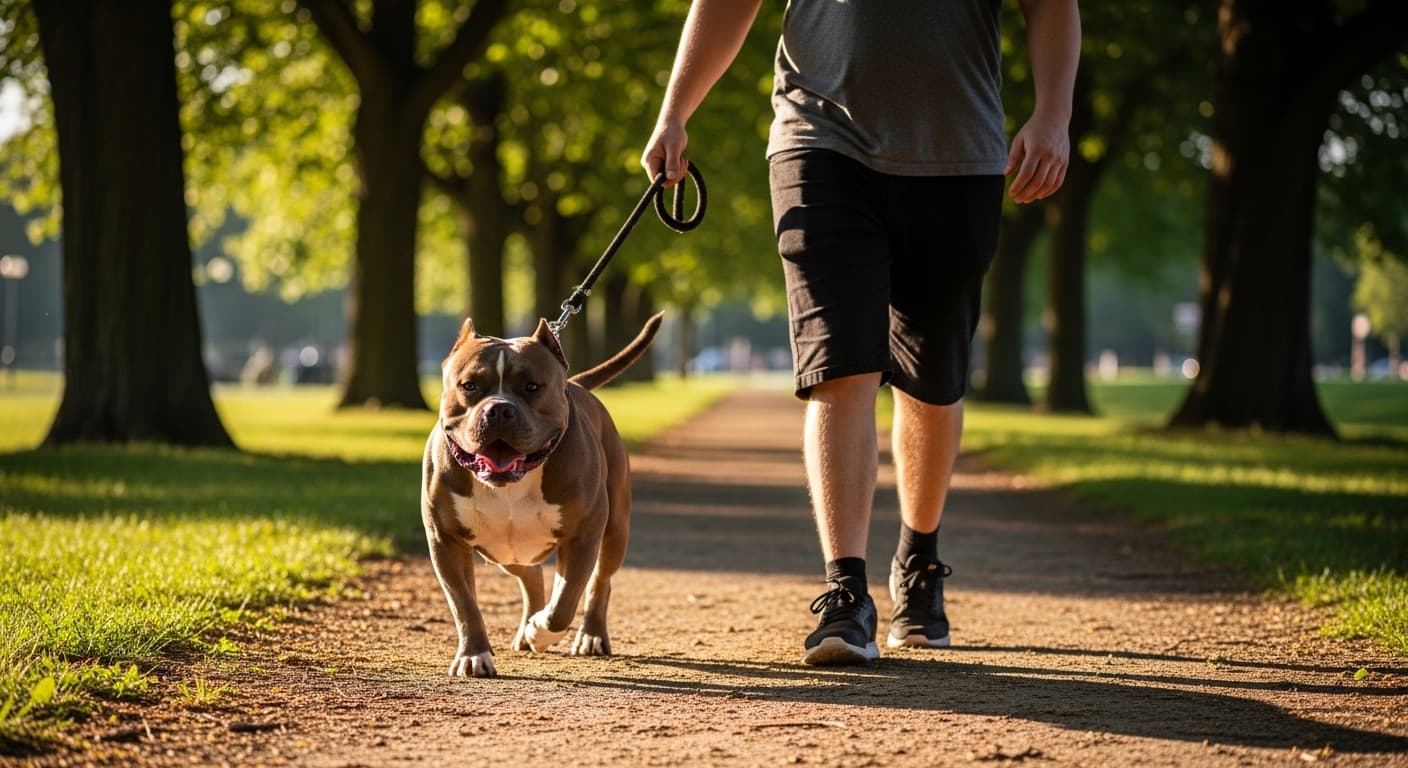
This is the single most effective technique I've learned. Instead of putting the dogs face-to-face immediately, you walk them parallel to each other at a distance where both dogs are aware of each other but not losing their minds.
Start at whatever distance keeps both dogs calm. For some dogs that might be 20 feet. For others it might be 50 feet or across the street. The key is keeping both dogs under threshold, which means they notice the other dog but aren't going into reaction mode.
Walk parallel for 5-10 minutes. Gradually decrease the distance as both dogs show relaxed body language. You're essentially letting them get used to each other's presence without the pressure of a direct approach.
Read Body Language Before Closing Distance
This is where most people mess up. They see that both dogs aren't growling and assume everything's fine. But dog body language is way more subtle than that.
Green flags, what relaxed dogs look like:
- Loose, wiggly body movement
- Tail wagging at mid-height (not stiff and high)
- Soft eyes, slightly squinting
- Mouth relaxed and slightly open
- Weight distributed evenly or slightly backward (not leaning forward intensely)
Red flags, what tense dogs look like:
- Stiff, still body
- Tail held high and rigid or tucked under
- Hard stare, eyes wide
- Hackles raised (the fur along the back)
- Lips pulled back or twitching
- Weight shifted forward, on toes
- Whale eye (you can see the whites of their eyes)
If you see red flags in either dog, don't push forward. Back up the distance and try again more slowly. Rushing past warning signs is how fights start.
Keep Leashes Loose
Tight leashes communicate tension to your dog. When you're white-knuckling the leash because you're nervous, your dog feels that through the line and gets nervous too. Try to keep slack in the leash, even when you want to hang on for dear life.
In my experience, this is one of the hardest things to actually do. You're scared, your adrenaline is up, and every instinct says grab tight. But loose leash signals safety. Practice relaxing your grip even when you're anxious.
Step-by-Step: The Actual Introduction Process
Okay, let's get practical. Here's exactly how I do introductions with my Bully.
Step 1: Set Up the Situation
Pick a neutral location. Coordinate with the other dog's owner about whether their dog is dog-friendly and if there are any things you should know. Both dogs should be on flat collars or martingales, not prong collars or harnesses during the intro if possible, since harnesses can actually increase pulling.
Honestly, I also make sure both dogs have had some exercise first. A tired dog is a calmer dog. If my Bully has been cooped up all day, the last thing I want to do is introduce him to a new dog while he's bouncing off the walls with pent-up energy.
Step 2: Start Parallel at Distance
Both handlers walk their dogs parallel, about 20 to 30 feet apart, heading in the same direction. Don't make the dogs face each other. Walk side by side but not together yet.
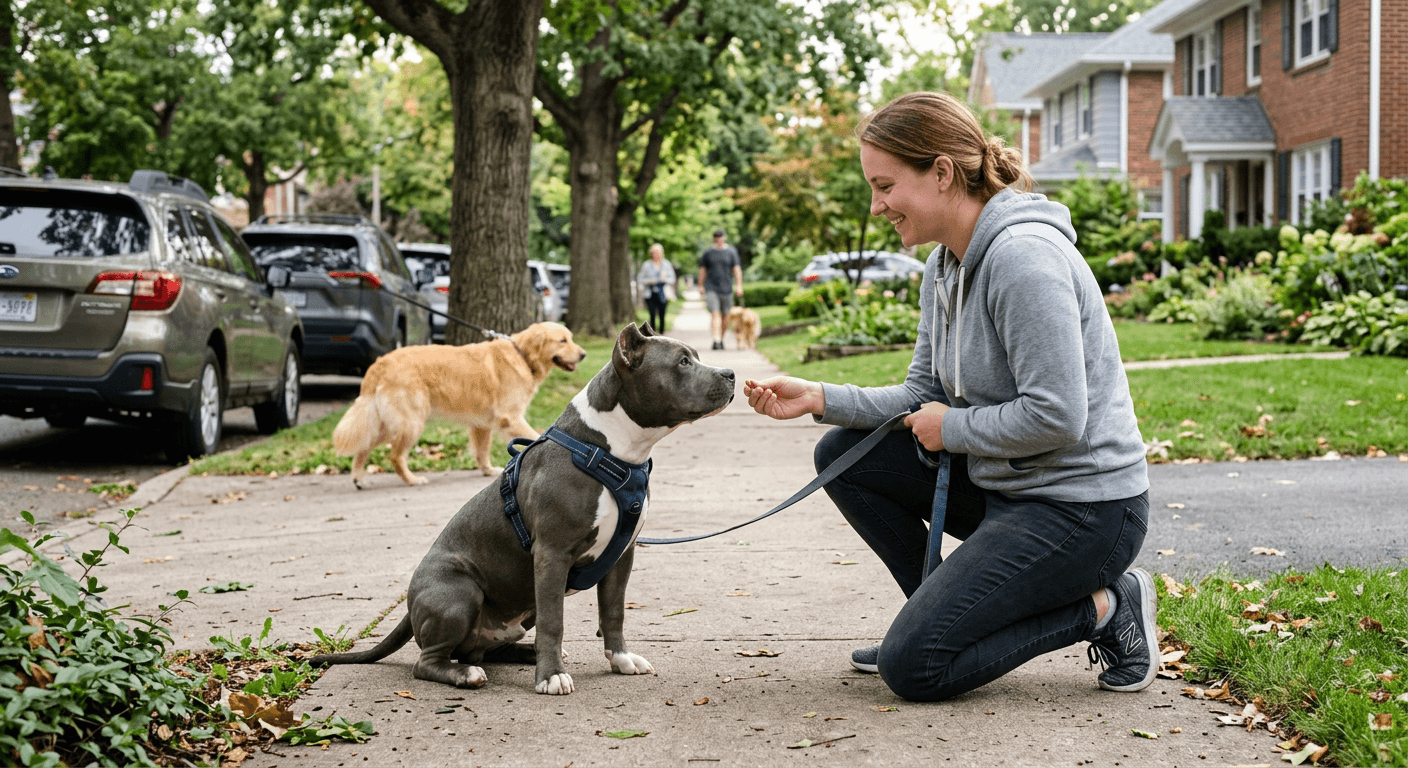
Watch your dog's body language constantly. Reward calm behavior with treats and calm verbal praise. Keep moving, don't stop to let them stare at each other.
Step 3: Gradually Decrease Distance
Over the next 5 to 10 minutes, slowly close the gap. Maybe get to 15 feet, then 10, then 5. After each decrease, watch for a few minutes to confirm both dogs are still relaxed before getting closer.
If either dog shows tension, calmly increase distance again. This isn't failure. This is reading your dog and responding appropriately.
Step 4: Allow a Brief Sniff
Once you're walking side by side and both dogs seem relaxed, you can allow a brief sniff. Let them approach each other from the side, not head-on. Dogs naturally do a curved approach with each other. Head-on approaches are actually considered confrontational in dog language.
Keep it to 3 to 5 seconds, then call your dog away and keep walking. A few brief sniffs are way better than one long stare-off. Interrupt before tension builds.
Step 5: Repeat and Build
Do a few more passes, a few more brief sniffs. Watch how both dogs look after each interaction. If they're getting looser and more playful, that's great. If they're getting stiffer each time, end the session on a positive note and try again another day.
Not every introduction leads to a dog park playdate right away. Sometimes you need two or three separate sessions before dogs are truly comfortable together. That's normal.
What To Do If Things Go Wrong
Even with perfect preparation, things can escalate. Here's what to do.
If You See Early Warning Signs
Immediately increase distance. Don't try to correct your dog verbally in a sharp or panicked way. Stay calm. Move your dog away smoothly. Take a breath. Going back to distance and starting over isn't defeat. It's smart handling.
If Dogs Start to Lunge or Growl
Call your dog away using a happy voice. "Let's go!" works better than a sharp "No!" because a happy voice doesn't add stress to an already tense situation. Get distance between the dogs and give your dog something easy to do, like a sit, so you can reward them for that instead.
If a Fight Breaks Out
Don't grab for collars with your bare hands. This is how people get seriously bitten, not because dogs are trying to bite you, but because they're in drive and mouths are moving fast. Use a leash to separate, or try the wheelbarrow technique with another person, each grabbing their own dog's back legs and walking backward at the same time.
After any fight, even a brief scuffle, end the session completely. Don't try to immediately reunite the dogs to "end on a good note." Give everyone time to decompress. Seek professional help before the next introduction attempt.
Off-Leash Introductions: Even More Caution Required
Dog parks are controversial in the bully breed community, and honestly, I understand why a lot of experienced owners avoid them. Off-leash dog parks are chaotic, unpredictable, and you have zero control over what other dogs come in.
If you want to do off-leash play, set it up intentionally. A fenced yard with one other dog you've already done on-leash introductions with is ideal. Keep early play sessions short, around 10 to 15 minutes, and supervise the whole time. Learn to read play signals versus actual tension escalating.
Healthy play includes: taking turns chasing, bouncing away and back, pausing to reset, loose and wiggly movement even when wrestling. Warning signs during play: one dog always being pinned, mounting combined with stiffness, resource guarding around toys or water, play getting faster and less reciprocal.
Building Long-Term Socialization Skills
One good introduction doesn't mean your work is done. Socialization is ongoing, especially for bully breeds who can become more selective with other dogs as they mature.
Keep Experiences Positive
Every interaction your dog has with other dogs leaves an impression. One bad experience can set back weeks of good work. Be selective about which dogs you introduce your bully to. Not every dog is a good match. Some dogs are just incompatible personalities, and that's okay.
Practice "Passing" Other Dogs
You don't always need a full introduction. One of the most useful skills is teaching your dog to pass other dogs on the sidewalk calmly without reacting. This is a foundation skill. Practice it constantly on walks. Reward your dog heavily for looking at another dog and then looking back at you instead of fixating or pulling.
Puppy Classes and Group Classes
If your dog is young, puppy socialization classes are genuinely one of the best investments you can make. Controlled group settings with appropriate dogs and professional supervision are ideal. For adult dogs, group training classes that don't involve off-leash play can also provide great exposure to other dogs in a structured way.
Consider a Dog-Savvy Trainer
If you're struggling with socialization, please work with a professional who has actual experience with bully breeds. Not every trainer understands these dogs. Look for someone who uses positive reinforcement and force-free methods, who doesn't advocate for alpha-rolling or flooding, and who has worked with pitbulls and American Bullies specifically.
In my experience, the best trainers will assess your individual dog, not just apply generic bully breed assumptions. Every dog is different.
Combating the Stigma While Setting Your Dog Up for Success
Every time your pitbull or bully breed has a calm, positive interaction with another dog, you're doing something bigger than just dog training. You're demonstrating to the world that these dogs can be well-socialized, well-behaved, and safe members of the community.
I've had people cross the street to avoid me and my Bully. I've gotten suspicious looks at parks. And I've also had kids run up to pet him and families come ask what breed he is because he was so well-behaved. The second type of interaction is way more common when I've done my homework and set my dog up to succeed.
That's the goal. Not perfection. Just consistently putting in the work so our dogs can live full, social lives and prove the haters wrong one calm interaction at a time.
Quick Reference: Introduction Checklist
- Choose neutral territory, never home turf
- Exercise both dogs beforehand
- Start parallel walking at distance
- Read body language before closing the gap
- Keep leashes loose
- Allow brief side-approach sniffs only
- Interrupt before tension builds
- End every session on a calm note
- Don't rush, multiple sessions are fine
- Know your dog's limits and respect them
You've got this. Bully breeds can and do have great relationships with other dogs. It just takes a little more patience, a little more skill, and a whole lot of paying attention. The effort is absolutely worth it.