How to Stop Your Pitbull from Pulling on Leash (Step-by-Step Guide)
I trained my 80-lb Bully to walk politely in 4 weeks. No harsh collars, just consistency.
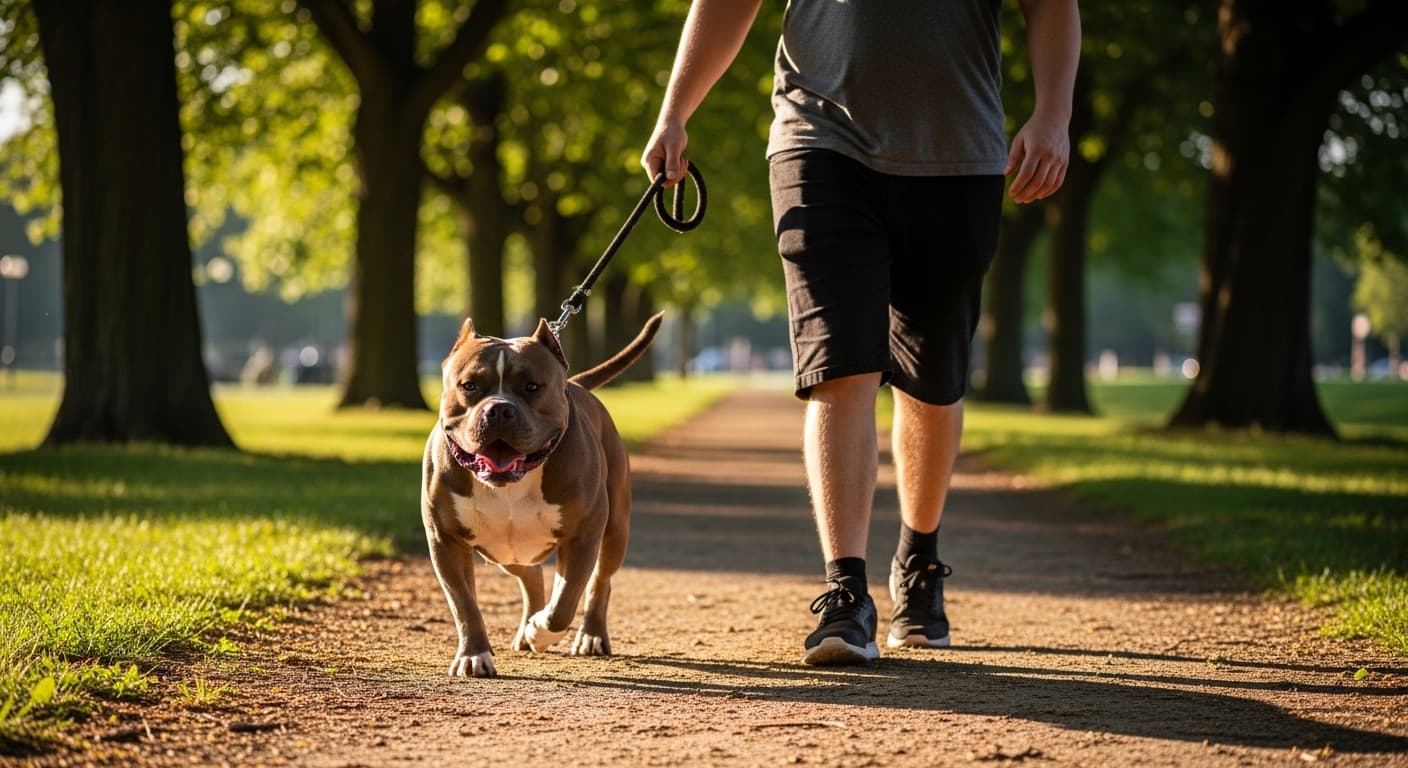
If your Pitbull drags you down the street like a sled dog, you're not alone. I spent the first year with my American Bully, Tank, wondering if I'd ever enjoy a peaceful walk again. Spoiler: I did. And you can too.
Quick answer: To stop your Pitbull from pulling, use a front-clip harness, practice the "stop-and-go" method consistently, and reward loose-leash walking every single time. It takes 3-6 weeks of daily training, but it works.
Let me be straight with you, this isn't a magic trick. You won't fix pulling in one afternoon. But if you follow this system for 15 minutes a day, you'll see real progress within a week. I promise.
Why Pitbulls Pull (And Why It's Not Just "Bad Behavior")
Before we fix the problem, you need to understand why it happens.
Pitbulls are strong. Tank weighs 80 pounds of pure muscle. When he wants to sniff that tree, he has the power to get there whether I'm ready or not. That's not stubbornness, that's physics.
Pulling gets rewarded. Every time your dog pulls and reaches what they want (a smell, another dog, the park), you've accidentally trained them that pulling works. You've been teaching them to pull without realizing it.
They're excited. Walks are the highlight of your dog's day. That excitement translates to energy, which comes out as pulling. It's not disrespect, it's enthusiasm.
The equipment matters. If you're using a regular collar or back-clip harness, you're actually encouraging pulling. These designs give your dog leverage, just like a sled dog harness.
Here's the good news: pulling is a learned behavior, which means it can be unlearned. It just takes consistency.
What You'll Need
- A front-clip harness (I recommend the Ruffwear Front Range (Check Price), see my full harness comparison)
- A 6-foot standard leash (not retractable, those teach pulling)
- High-value treats (small, soft, stinky, think chicken, cheese, or hot dogs)
- Patience (seriously, this is the hardest one)
- 15-20 minutes a day for training walks
Optional but helpful:
- A treat pouch so you can reward instantly
- A clicker for marker training (I don't use one, but some trainers love them)
Step-by-Step: The Stop-and-Go Method
This is the technique that worked for Tank and dozens of dogs I've helped train through friends and family. It's simple, but you have to be consistent.
Step 1: Start in a Low-Distraction Environment
Don't try this method for the first time at the dog park. Start in your driveway, backyard, or a quiet street.
Why? Because your Pitbull needs to learn the game before you add distractions. Tank couldn't focus at the park until he mastered this at home.
What to do:
- Put on your dog's front-clip harness
- Attach the leash to the front ring (not the back)
- Have treats ready in your pocket or pouch
- Take a deep breath, this takes patience
Step 2: The Golden Rule, When They Pull, You Stop
This is the core of the method. Every single time the leash gets tight, you stop moving.
Stand completely still. Don't pull back (that creates opposition reflex and makes them pull harder). Don't yell. Don't move forward. Just freeze like a statue.
What happens next: Your dog will probably keep pulling for a few seconds. Let them. Eventually, they'll turn back to see why you're not moving. The second the leash goes slack, even a tiny bit, say "Yes!" and take a step forward.
My experience with Tank: The first training walk took us 20 minutes to go 50 feet. I'm not exaggerating. He pulled, I stopped. He pulled, I stopped. Over and over. It felt ridiculous. But by day 3, he started checking in with me before pulling. By week 2, he was walking politely 60% of the time.
Step 3: Reward Loose-Leash Walking Heavily
Here's the mistake most people make: they only pay attention when the dog does something wrong.
Instead, throw a party every time your dog walks nicely. For the first week, I gave Tank a treat every 5-10 steps of loose-leash walking. Yes, really. I went through a lot of hot dogs.
How to reward:
- The moment your dog walks beside you with a loose leash, mark it ("Yes!" or click)
- Immediately give a treat
- Keep walking
- Repeat every few steps
Pro tip: Deliver the treat at your hip level, not down low. This teaches your dog to walk at your side, not lag behind sniffing for dropped treats.
Step 4: Add the "Let's Go" Cue
Once your dog understands the stop-and-go game (usually 3-5 days), add a verbal cue.
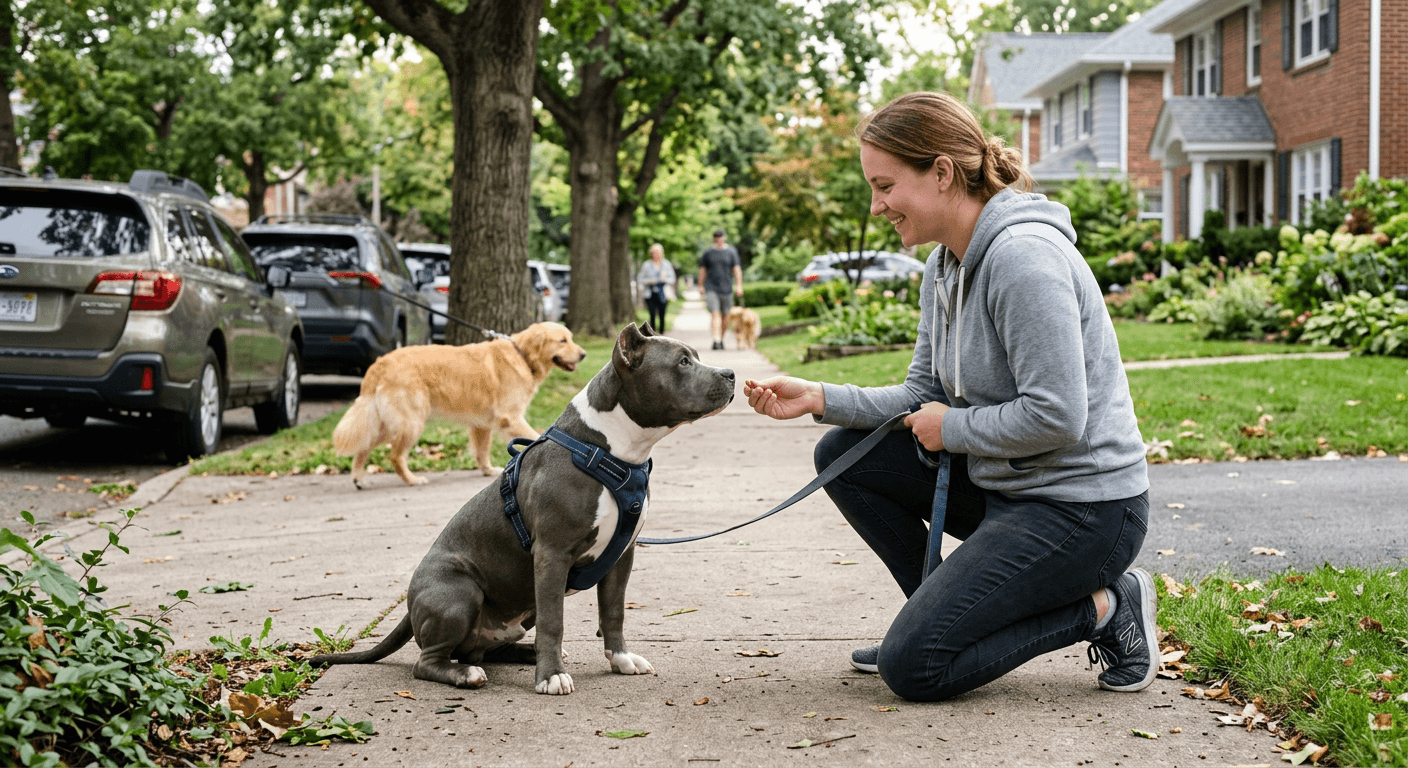
When the leash gets tight and you stop, wait for them to look at you. When they do, say "Let's go" in a cheerful voice and start walking again. Reward them when they follow.
This teaches them that checking in with you = walk continues. Pulling = everything stops.
Tank's breakthrough moment: On day 6, we were walking and he spotted a squirrel. He started to lunge, but mid-pull, he stopped himself and looked back at me. I almost cried. I gave him five treats and massive praise. That was the moment I knew it was working.
Step 5: Use the Front-Clip Redirect
The beauty of a front-clip harness is physics. When your dog pulls forward, the leash pulls them to the side, which naturally turns them back toward you.
How to use it:
- When your dog starts to pull, don't yank back
- Instead, stay still or take one step backward
- The harness will gently turn your dog sideways
- The moment they orient back to you, reward and keep moving
This isn't painful or harsh, it's just momentum redirection. Tank barely noticed, but it broke his pulling habit way faster than a back-clip harness ever did.
Step 6: Practice the "Check-In" Game
This is an advanced technique, but it's a game-changer.
Randomly during walks, say your dog's name. When they look at you, reward them. That's it.
Why this works: You're teaching your dog that paying attention to you is rewarding. Over time, they'll start checking in with you automatically, which means less pulling because they're focused on you instead of the environment.
I do this 5-10 times per walk now. Tank's default is to glance back at me every 20-30 seconds, which means I can catch potential pulls before they happen.
Step 7: Gradually Increase Distractions
Once your dog can walk nicely in your quiet street, level up:
- Week 1-2: Quiet neighborhood, low distractions
- Week 2-3: Busier streets with some people/dogs at a distance
- Week 3-4: Parks, sidewalks with foot traffic
- Week 4+: High-distraction environments (dog parks, trails, downtown)
Don't skip ahead. Tank regressed every time I tried to rush to the park before he was ready. Two steps forward, one step back is normal.
Step 8: Be Consistent, No Exceptions
This is where most people fail. You can't enforce the rules Monday through Friday and then let your dog drag you on Saturday because you're tired.
Every walk must follow the same rules:
- Pulling = stop
- Loose leash = reward and keep moving
- No exceptions for squirrels, other dogs, or exciting smells
I know it's hard. There were days I wanted to just let Tank pull to the park because I was exhausted. But every time I let it slide, we lost progress.
Consistency beats perfection. You'll mess up. You'll have bad days. That's fine. Just get back on track the next walk.
Common Mistakes to Avoid
1. Using a Retractable Leash
Retractable leashes teach pulling. The dog learns that pulling extends the leash and gives them more freedom. This is the exact opposite of what we want.
Use a standard 6-foot leash. Once your dog walks perfectly on a short leash, you can add a long line (15-30 feet) for sniff walks, but never a retractable.
2. Pulling Back When Your Dog Pulls
This creates opposition reflex. When you pull back, your dog instinctively pulls harder. It's a tug-of-war you'll never win against a 70-pound Pitbull.
Instead, stop moving. Be an immovable tree. Let them figure it out.
3. Only Training on "Real" Walks
If you only practice during your regular neighborhood walk, you're mixing "training time" with "exercise time." Your dog is too excited and distracted to learn.
What worked for Tank: I added short 10-minute "training walks" in the driveway or backyard before our real walk. He burned off some excitement and learned the rules in a controlled environment. Then our real walk was easier.
4. Giving Up After a Week
I see this all the time. Someone tries for a week, sees minimal progress, and quits.
Here's the reality: Week 1 feels hopeless. Week 2 shows tiny improvements. Week 3 is when things click. By week 4-6, you'll have a different dog.
Tank didn't walk politely for 3 solid weeks. But I kept at it, and now he's a dream on leash. Your Pitbull can get there too.
5. Skipping the Harness Upgrade
You can't train loose-leash walking with a collar or back-clip harness. The equipment works against you.
Spend $30-60 on a good front-clip harness. It's not optional. Check out my full harness reviews if you need help choosing.
Pro Tips from My Experience
Tire Them Out First
A tired Pitbull is a well-behaved Pitbull. Before training walks, I play fetch or tug with Tank for 10 minutes. He has less pent-up energy to burn on the walk, which means less pulling.
Use a "Sniff Break" Cue
Walks aren't just exercise, they're mental stimulation for your dog. Let them sniff, but on your terms.
I taught Tank "go sniff" as a cue. When he walks nicely for 50-100 feet, I stop and say "go sniff." He gets 30-60 seconds to explore smells as a reward. This keeps him motivated to walk politely because sniffing is the payoff.
Practice in Your Living Room
Sounds weird, but it works. Practice loose-leash walking in your house where there are zero distractions. Walk back and forth across your living room, rewarding your dog for staying at your side.
This builds the foundation without the chaos of the outside world. Tank learned the concept in our hallway before we ever hit the sidewalk.
Switch Up Your Route
Dogs pull more on familiar routes because they know where you're going and get excited. Mix it up. Take different streets, reverse your usual path, go at different times of day.
This forces your dog to pay attention to you instead of just following the routine.
Front-Clip for Training, Back-Clip for Fun
Once Tank learned to walk politely, I started using the back-clip ring on his harness for hikes and park visits where I want him to have more freedom. But if we're in a crowded area or practicing training, I switch back to the front-clip.
You don't have to use front-clip forever, just until the habit is locked in.
Frequently Asked Questions
How long does it take to stop a Pitbull from pulling?
With daily 15-20 minute training sessions, most dogs show significant improvement in 3-6 weeks. Tank took about 4 weeks to walk politely 80% of the time. Strong-willed dogs might take 2-3 months. It depends on consistency and your dog's personality.
My Pitbull pulls worse with a front-clip harness. Why?
This can happen if the harness doesn't fit properly or if you're still moving forward when they pull. Make sure the chest strap is snug (two-finger rule) and positioned correctly. And remember: stop moving the instant the leash gets tight. No exceptions.
Can I use a prong collar or choke chain instead?
I'm not going to tell you what to do, but I will tell you what I did. I tried a prong collar on Tank once, on a trainer's recommendation. It stopped the pulling, but he looked miserable. He was walking nicely out of discomfort, not because he learned anything.
I switched to positive reinforcement with a front-clip harness, and while it took longer, Tank is now genuinely happy on walks. He's not walking politely to avoid pain, he's doing it because it's rewarding.
Plus, Pitbulls already have a bad reputation. The last thing we need is to reinforce the "aggressive breed" stereotype with harsh equipment.
What if my Pitbull pulls toward other dogs aggressively?
That's leash reactivity, which is a separate issue from general pulling. The techniques in this guide will help with control, but if your dog lunges, barks, or shows aggression toward other dogs, you need to work with a professional trainer who specializes in reactivity.
In the meantime, increase distance from triggers, use high-value treats, and practice the "look at me" command. But seriously, get a trainer. This isn't a DIY problem.
Should I use a head halter like a Gentle Leader?
Head halters work by controlling your dog's head, which controls their body. They're effective, but many dogs hate them.
I tried one on Tank. He spent 15 minutes pawing at his face trying to rip it off. Some dogs adjust, but I had better success with a front-clip harness. Your mileage may vary.
What if I don't have time for daily training walks?
Then you don't have time for a Pitbull, honestly. These dogs need exercise and mental stimulation daily. But if you're genuinely pressed for time, 10 minutes of focused training is better than nothing. Tank's best progress came from short, consistent sessions, not marathon training walks.
Can I hire a trainer to do this for me?
Trainers can help, but you still have to do the work. A trainer can't magically fix pulling in a one-hour session. They teach you the techniques, then you practice daily.
That said, if you're struggling, a few sessions with a good trainer can be worth it. They'll troubleshoot your specific challenges and keep you accountable.
What's Next?
You've got the method. Now it's on you to put in the reps.
Start tomorrow. Grab a front-clip harness (here's my top pick), load up on treats, and commit to 15 minutes of training. Do it every single day for a month.
I'm not going to lie, the first week sucks. You'll feel like you're not making progress. You'll question whether it's working. You might want to quit.
Don't.
By week three, you'll see the lightbulb go off in your dog's head. By week six, walks will actually be enjoyable. And six months from now, you'll forget what it was like when your Pitbull used to drag you around.
Tank and I walk two miles every morning now. He trots next to me, checks in regularly, and only pulls when a squirrel does something truly outrageous. Those walks are the best part of my day.
You can get there too. Your Pitbull is smart, strong, and capable of learning. They just need you to show them what you want, clearly, consistently, and patiently.
Now go teach your dog to walk like a gentleman. You've got this.