Best Dog Beds for Large Dogs That Chew
Tired of replacing destroyed dog beds? We tested chew-resistant beds built for large power chewers. Find out which beds use ballistic nylon and aluminum frames that actually survive.
Why Your Large Dog Keeps Destroying Their Bed (And How to Finally Fix It)
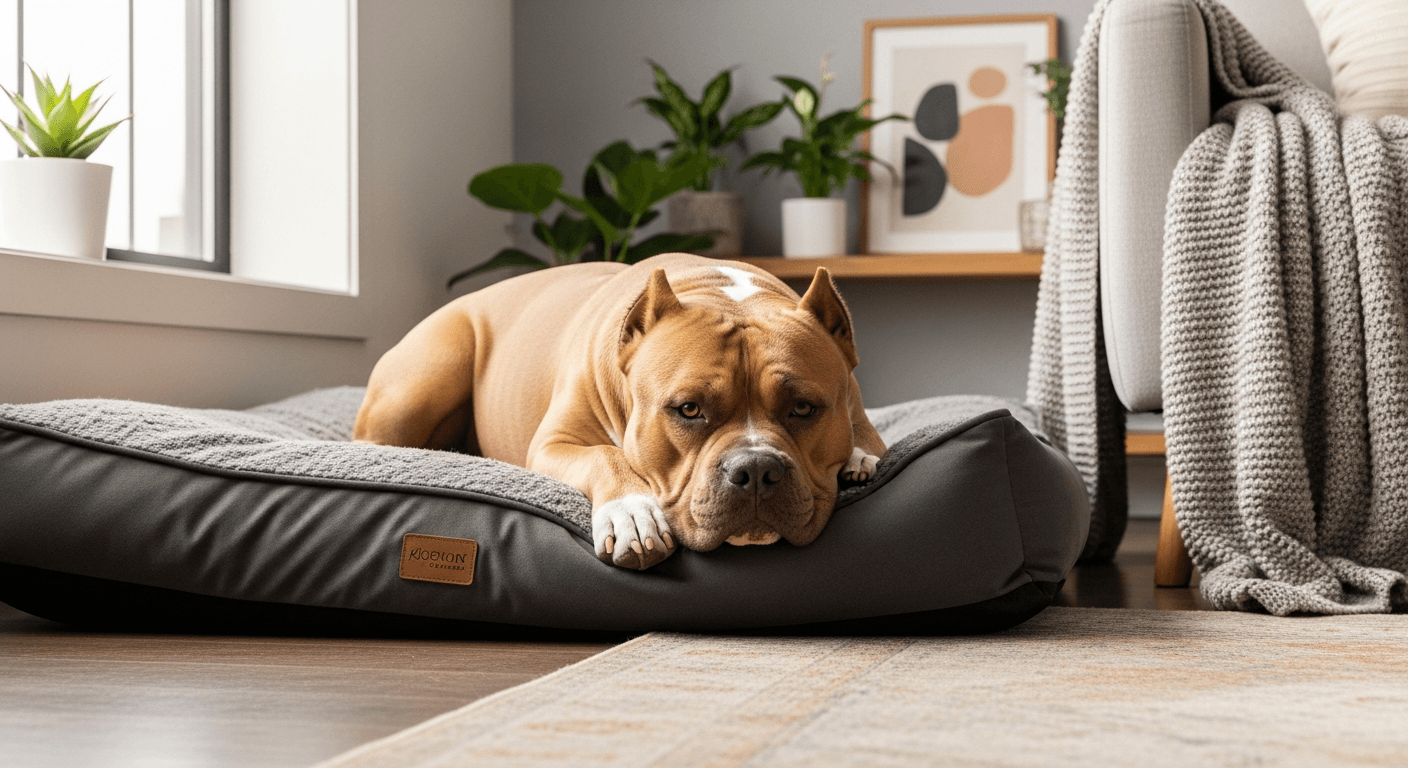
Last year, I went through seven dog beds. SEVEN. My American Bully, Tank, treated each one like a personal chew toy. Within days—sometimes hours—he'd rip through the fabric, pull out the stuffing, and turn a $60 bed into a pile of fluff scattered across my living room.
I was frustrated, my wallet was crying, and Tank still didn't have a comfortable place to sleep. Sound familiar?
Here's what I learned: most dog beds simply aren't designed for large, powerful dogs who love to chew. The pretty fabric covers tear easily. The cheap foam inside becomes a chewing target. And those cute raised edges? They're the first thing to go.
After extensive research (and way too much money spent), I finally found dog beds that can actually withstand a power chewer. In this guide, I'll share which beds have survived Tank's jaws, what materials actually hold up, and how to choose a bed that won't be destroyed in the first week.
Quick Answer: The best dog beds for large dogs that chew are made with heavy-duty ballistic nylon, ripstop fabric, or aluminum frames. Look for chew-resistant construction, reinforced seams, waterproof liners, and orthopedic memory foam for joint support. Top choices include K9 Ballistics Chew Proof Bed, Kuranda Elevated Bed, Big Barker Orthopedic Bed, and Carhartt Dog Bed. Always choose beds with warranties or guarantees specifically covering chewing damage.
Understanding Why Large Dogs Chew Their Beds
Before we dive into specific beds, let's understand WHY your dog is destroying their bed. It's not always what you think.
Boredom and Lack of Stimulation
Large breeds like Pitbulls, American Bullies, Rottweilers, and German Shepherds need mental and physical stimulation. When Tank is bored, he chews. His bed is convenient and right there, so it becomes the target.
Anxiety and Stress
Some dogs chew when they're anxious—especially when left alone. Tank used to destroy his bed within an hour of me leaving the house. Separation anxiety was the real culprit, not just bad behavior.
Teething (For Puppies)
If you have a large breed puppy, their bed is a massive chew toy in their eyes. Puppies teethe until about 6-7 months, and everything is fair game during that phase.
Natural Instinct
Bully breeds and other power chewers have strong jaws and a natural drive to bite and tear. It's not aggression—it's genetics. If the bed fabric is weak, they'll exploit it.
Poor Quality Beds
Here's the harsh truth: most dog beds are made cheaply. Thin fabric, weak stitching, and exposed foam practically invite destruction. Your dog isn't the problem—the bed is.
What Makes a Dog Bed Truly Chew-Resistant?
After testing bed after bed, I learned exactly what separates the survivors from the shredded. Here's what actually matters:
Material Matters Most
Ballistic nylon: This military-grade fabric is used in bulletproof vests. If it can stop bullets, it can handle teeth. K9 Ballistics uses 1680D ballistic nylon—the toughest available.
Ripstop fabric: Designed to resist tearing, with reinforced threads woven throughout. Even if your dog manages to puncture it, the tear won't spread.
Cordura: A heavy-duty nylon fabric with exceptional abrasion resistance. Commonly used in military gear and outdoor equipment.
Aluminum frames: Elevated beds like Kuranda use aluminum or PVC frames with ballistic fabric. Dogs can't chew through metal, and the elevated design removes stuffing from the equation entirely.
Avoid: Cotton, polyester blends, microfiber, or anything labeled "soft" or "plush." These materials are destroyed in minutes.
Construction Quality
Look for double or triple-stitched seams with reinforced thread. Zippers should be hidden or covered to prevent access. The bed should have no exposed seams, buttons, or decorative elements that become chew targets.
Waterproof Liner
Even if your dog doesn't chew through the cover, accidents happen. A waterproof inner liner protects the foam and prevents mold, bacteria, and odors. This is non-negotiable for large dogs.
Orthopedic Support
Large dogs are prone to joint issues—hip dysplasia, arthritis, and elbow problems. High-density orthopedic foam or memory foam provides proper support and pressure relief. Tank is only 3 years old, but I already notice him favoring his orthopedic bed.
Size Appropriately
Too small, and your dog will hang off the edges (and potentially chew them in frustration). Measure your dog from nose to tail while lying down, then add 6-12 inches. For large breeds, I recommend XL or XXL sizes.
Warranty = Confidence
Companies that offer warranties covering chewing damage stand behind their products. If a bed has a "chew-proof guarantee," the manufacturer knows it can withstand power chewers.
The Best Chew-Resistant Dog Beds for Large Dogs
1. K9 Ballistics Chew Proof Elevated Dog Bed
Why it's chew-proof: Made with 1680D ballistic nylon—literally the toughest fabric available. The elevated aluminum frame keeps dogs off cold floors and provides airflow. No stuffing means nothing to rip out.
Tank's verdict: This bed changed everything. Tank tried to chew it for about a week, then gave up. It's been 10 months, and the bed still looks brand new. The elevated design also keeps him cooler in summer.
Pros:
- Ultra-durable 1680D ballistic nylon fabric
- Aluminum frame—impossible to chew through
- Elevated design for airflow and joint relief
- Easy to clean (hose it off)
- 180-day chew-proof guarantee
- Made in the USA
Cons:
- Expensive ($150-250 depending on size)
- Some dogs prefer cushioned beds over firm surfaces
- Assembly required (though it's easy)
Best for: Aggressive chewers who destroy traditional beds. Ideal for outdoor use or dogs who run hot.
2. Big Barker 7" Orthopedic Dog Bed
Why it's chew-proof: While not marketed as "chew-proof," the heavy-duty microfiber cover is surprisingly tough, and the bed comes with a 10-year warranty. The real draw is the therapeutic-grade orthopedic foam.
Tank's verdict: Tank doesn't chew this bed—he's too comfortable on it. The 7-inch thick memory foam is like sleeping on a cloud. I bought this for Tank's crate, and he immediately claimed it as his favorite spot.
Pros:
- Therapeutic-grade orthopedic foam (best I've tested)
- 10-year warranty (covers everything, including chewing)
- Waterproof liner included
- Headrest bolster for neck support
- Microfiber cover is surprisingly durable
Cons:
- Very expensive ($200-400)
- Cover isn't ballistic-grade (determined chewers can damage it)
- Large/bulky—hard to move
Best for: Large dogs with joint issues, senior dogs, or dogs who don't aggressively chew but need maximum comfort.
3. Kuranda Elevated Dog Bed
Why it's chew-proof: Aircraft-grade aluminum frame with ballistic fabric or vinyl cover. Completely elevated with no stuffing. Dogs can't chew through metal, and the fabric is military-grade.
Tank's verdict: This is Tank's outdoor bed. It sits on my patio, and he loves lounging on it. After 8 months of outdoor exposure and Tank's chewing attempts, it's still perfect.
Pros:
- Indestructible aluminum frame
- Elevated design (great for outdoor use)
- Ballistic fabric or vinyl options
- Weather-resistant and easy to clean
- 1-year warranty against chewing
- Supports up to 250 pounds
Cons:
- Firm surface (not plush)
- Assembly required
- Can be slippery for some dogs
Best for: Outdoor use, garages, or dogs who prefer firm surfaces.
4. Carhartt Dog Bed (Durable Canvas)
Why it's chew-proof: Carhartt is known for making workwear that withstands extreme conditions. Their dog beds use the same durable waxed canvas material with water-repellent coating.
Tank's verdict: I bought this for Tank's second sleeping spot (he has multiple—don't judge). The canvas is surprisingly tough, and the bed has held up for 5 months with minimal wear. It's not "indestructible," but it's far more durable than typical beds.
Pros:
- Heavy-duty waxed canvas
- Water-repellent coating
- Machine washable cover
- Affordable ($60-120)
- Carhartt's reputation for durability
Cons:
- Not as chew-resistant as ballistic nylon
- Foam insert isn't orthopedic-grade
- Can retain odors if not washed regularly
Best for: Budget-conscious owners who need something tougher than typical beds but can't afford high-end options.
5. West Paw Heyday Dog Bed
Why it's chew-proof: Made from IntelliLoft fiber fill that's designed to resist clumping and maintain shape. The cover uses durable oxford fabric with a water-resistant base.
Tank's verdict: This is Tank's travel bed. It's lightweight, packs down, and has survived car trips, hotel stays, and Tank's occasional chewing sessions. Not the most durable on this list, but solid for its price point.
Pros:
- Machine washable (entire bed, not just cover)
- Made in the USA with recycled materials
- Maintains shape well
- Affordable ($60-100)
- Good for travel
Cons:
- Not as chew-resistant as K9 Ballistics or Kuranda
- Determined chewers can eventually damage it
Best for: Moderate chewers or travel beds.
6. Coolaroo Elevated Dog Bed
Why it's chew-proof: Steel frame with breathable HDPE fabric (high-density polyethylene). The fabric is tough, tear-resistant, and allows airflow. Designed to withstand outdoor conditions.
Tank's verdict: Another outdoor winner. This bed sits in my backyard, and Tank uses it constantly during summer. The breathable fabric keeps him cool, and the steel frame hasn't budged despite his weight and chewing.
Pros:
- Steel frame (extremely durable)
- Breathable HDPE fabric stays cool
- Weather-resistant and fade-resistant
- Easy to clean (hose it off)
- Affordable ($50-100)
Cons:
- Firm surface (no cushioning)
- Fabric can stretch over time with heavy use
- Not ideal for cold weather (no insulation)
Best for: Outdoor beds or dogs in hot climates.
How to Prevent Bed Chewing
Even the toughest bed can be damaged by a determined chewer. Here's how I trained Tank to stop destroying his beds:
Provide Appropriate Chew Toys
Tank gets a KONG Extreme filled with frozen peanut butter every time I leave the house. This redirects his chewing instinct away from his bed. Check out my guide on the best indestructible dog toys for Pitbulls for more options.
Exercise Before Alone Time
A tired dog is a good dog. I walk Tank for 30-45 minutes before I leave. Exhausted dogs sleep—they don't chew.
Address Anxiety
Tank's bed chewing significantly reduced once I addressed his separation anxiety. I used crate training, gradual departures, and calming supplements. If anxiety is the root cause, training is essential—read my article on training an American Bully puppy for techniques.
Catch and Redirect
When I catch Tank chewing his bed, I immediately say "No," remove him, and give him an appropriate chew toy. Consistency is key.
Bitter Spray (Use Sparingly)
Bitter apple spray can deter chewing, but it's a short-term fix. I used it for a week while training Tank, then phased it out. Don't rely on it long-term.
Supervise Initially
When I introduced Tank's new chew-proof bed, I supervised him for the first few days. Every time he tried to chew, I redirected him. After a week, he lost interest.
Mistakes to Avoid When Buying a Chew-Resistant Bed
Mistake #1: Buying Cheap Beds
I learned this the hard way. Spending $30 on a cheap bed that lasts 2 weeks is more expensive than buying a $150 bed that lasts 2+ years. Do the math.
Mistake #2: Ignoring Size
Too small, and your dog won't use it (or will chew it out of frustration). Too big, and you're wasting money and space. Measure your dog properly.
Mistake #3: Believing "Chew-Resistant" Marketing
Many beds claim to be "chew-resistant" but aren't. Look for specific materials (ballistic nylon, aluminum frames) and warranties that cover chewing damage. Marketing fluff isn't enough.
Mistake #4: Skipping Warranties
If a company doesn't stand behind their product with a warranty, it's not truly chew-proof. The best beds have guarantees.
Mistake #5: Not Addressing the Root Cause
Buying a chew-proof bed doesn't fix boredom, anxiety, or lack of training. Address the behavior alongside investing in a durable bed.
Maintenance Tips for Long-Lasting Beds
Clean Regularly
I wash Tank's bed covers monthly (or whenever they smell). Elevated beds get hosed off weekly. Clean beds last longer and smell better.
Rotate Beds
Tank has 3 beds in rotation. This distributes wear and prevents one bed from getting destroyed faster.
Inspect for Damage
I check Tank's beds weekly for loose seams, tears, or exposed foam. Small issues get fixed immediately before they become big problems.
Protect Outdoor Beds
If your bed is outdoors, bring it in during extreme weather. UV exposure and moisture degrade materials over time.
Frequently Asked Questions
What is the most chew-proof dog bed?
The K9 Ballistics Chew Proof Elevated Dog Bed and Kuranda Elevated Dog Bed are the most chew-resistant beds I've tested. Both use aluminum frames and military-grade ballistic fabric. Tank has tried to chew both for months with zero damage. They're expensive, but they're genuinely indestructible.
Why does my dog keep chewing his bed?
Dogs chew beds due to boredom, anxiety, teething (puppies), natural chewing instinct, or because the bed is low quality and easy to destroy. Large breeds and power chewers like Pitbulls and American Bullies have strong jaws and a natural drive to chew. Address the underlying cause through exercise, mental stimulation, and proper training.
Are elevated dog beds better for large dogs?
Yes, elevated beds offer several benefits: they're impossible to chew through (aluminum/steel frames), provide airflow to keep dogs cool, reduce joint pressure, and are easy to clean. However, some dogs prefer cushioned beds. I use both—an elevated bed for outdoor use and an orthopedic bed for indoor sleeping.
How do I stop my large dog from destroying beds?
Provide appropriate chew toys, exercise your dog before leaving them alone, address separation anxiety through training, redirect chewing behavior when caught, and invest in a truly chew-resistant bed. I followed these steps with Tank, and his bed destruction dropped to zero within 3 weeks. Check out my guide on training techniques for more help.
What size bed should I get for a large dog?
Measure your dog from nose to tail while lying down in their natural sleeping position, then add 6-12 inches. For large breeds (50-90 pounds), you'll typically need XL or XXL sizes. Tank is 65 pounds, and he uses XL beds. It's better to go too big than too small.
Are orthopedic beds worth it for large dogs?
Absolutely. Large breeds are prone to hip dysplasia, arthritis, and joint issues. Orthopedic memory foam provides proper support and pressure relief. I noticed Tank's mobility improve after switching to the Big Barker orthopedic bed. If your dog is over 50 pounds or senior, orthopedic support is essential.
Can I wash a chew-resistant dog bed?
Most chew-resistant beds have removable, machine-washable covers (K9 Ballistics, Carhartt, West Paw). Elevated beds like Kuranda and Coolaroo can be hosed off directly. Always check the manufacturer's instructions. I wash bed covers monthly and hose down elevated beds weekly.
Final Thoughts: Invest Once, Stop Replacing
I spent over $400 on cheap dog beds that got destroyed in days or weeks. Tank slept on scraps of fabric while I kept ordering "indestructible" beds that weren't.
Then I bought the K9 Ballistics elevated bed and the Big Barker orthopedic bed. Ten months later, both beds are still in perfect condition. Tank is comfortable, I'm not constantly replacing destroyed beds, and I've actually saved money.
If you own a large dog that chews, stop buying cheap beds. Invest in quality once, and you'll never have to deal with shredded beds again.
My top picks? The K9 Ballistics elevated bed for aggressive chewers and the Big Barker orthopedic bed for maximum comfort. Together, they've solved Tank's sleeping situation completely.
Your dog deserves a comfortable, durable bed. You deserve to stop wasting money on junk. Make the investment—you won't regret it.