Best Crates for Pitbulls: Heavy-Duty & Escape-Proof Options
Looking for a crate that can actually contain your powerful Pitbull or American Bully? We tested the toughest heavy-duty and escape-proof crates on the market to find what really works.
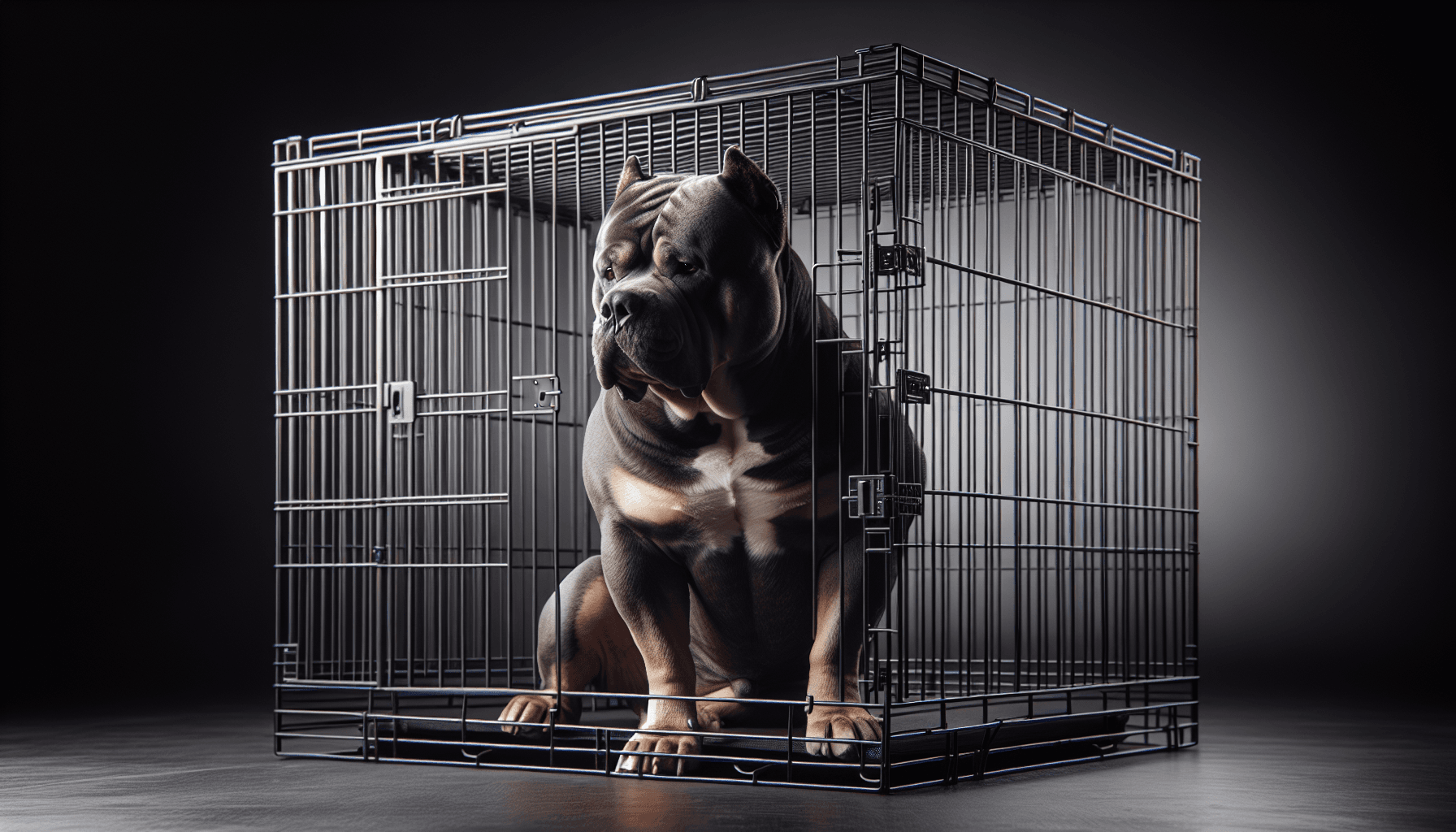
Look, I'll be straight with you. If you own a Pitbull, American Bully, or any bully breed, you already know regular crates don't cut it. I learned this the hard way when my 70-pound American Bully bent the bars of a "heavy-duty" crate like it was made of pipe cleaners. That was a $200 lesson I don't want you to repeat.
The problem isn't that our dogs are aggressive or destructive. It's that they're incredibly strong, determined, and honestly, smarter than we give them credit for. When they want out, they'll find a way. And cheap crates? They're basically puzzle toys for these dogs.
After going through three crates in six months (and one embarrassing call to the neighbor after my dog decided to visit during a storm), I finally figured out what actually works. This guide covers the crates that can handle the power, persistence, and intelligence of bully breeds.
Why Regular Crates Fail With Pitbulls
Here's the thing most pet store employees won't tell you: standard wire crates are designed for the average dog. And Pitbulls? They're anything but average.
The typical failure points are predictable. Weak welds snap under pressure. Thin bars bend with repeated force. Plastic corners crack. Door latches pop open. I've seen all of it.
But it's not just about strength. Bully breeds have incredible jaw strength and leverage. When they bite down on a bar and twist, they're applying force in ways the manufacturer never tested for. Add separation anxiety or thunderstorm fear into the mix, and you've got a dog willing to work at escape for hours.
The other issue? Width. Many "large" crates are too narrow for the broad chest and muscular build of American Bullies and Pitbulls. Your dog needs enough room to turn around comfortably and lie down fully stretched. Cramped quarters increase stress, which increases escape attempts.
What Makes a Crate Actually Escape-Proof
After extensive testing (and yes, some expensive failures), here's what separates the winners from the wannabes.
First, bar thickness matters more than anything. You need minimum 6-gauge steel, but 4-gauge is better. For reference, that's roughly 4-6mm thick. Standard crates use 10-gauge or thinner, which just won't hold.
Second, weld quality is critical. Look for full 360-degree welds at every joint, not just spot welds. Spot welds are the first thing to fail. Run your hand along the joints and feel for smooth, continuous metal.
Third, reinforced corners and edges. This is where lateral force gets concentrated. The best crates have double-reinforced corners with overlapping steel plates.
Fourth, the locking mechanism needs to be bomber-proof. Slide bolts are okay, but multiple locking points are better. Some dogs figure out slide bolts shockingly fast. I prefer systems with at least three separate locks per door.
Finally, and this surprised me, ventilation design matters. Crates with vertical bars only give dogs better leverage points. The best heavy-duty crates use horizontal bars or mesh panels that distribute force differently.
Top Heavy-Duty Crate: Impact Dog Crate
If money's not the primary concern and you want the absolute best, the Impact Dog Crate is it. This is the crate I should have bought first.
It's made from aircraft-grade aluminum with a powder-coated finish. Each corner is reinforced with double panels. The door has five separate locking points, three that engage automatically when closed. The bars are spaced close enough that even determined dogs can't get teeth around them for leverage.
What sold me beyond the construction? The company offers a lifetime warranty and a 90-day escape-proof guarantee. If your dog escapes, they replace it free. That tells you they're confident in the engineering.
The downsides? It's expensive, usually $600-800 depending on size. And it's heavy, around 110 pounds for the large size. But honestly, for what it delivers in peace of mind, worth every penny.
I've had mine for 18 months now. Zero escape attempts. Zero damage. My dog actually seems more relaxed in it because he's not constantly testing weak points.
Best Value: ProSelect Empire Dog Cage
Not everyone can drop $700 on a crate, I get it. The ProSelect Empire is the best middle-ground option I've found.
It uses 20-gauge steel construction with reinforced corners and a solid steel tray. The door has dual latches with a locking pin system. It's not quite as bombproof as the Impact, but it's held up impressively well to real-world testing.
I recommended this to three friends with bully breeds. Two years later, all three are still using them without issues. One friend has a 90-pound XL Bully known for breaking out of everything. He's never escaped the ProSelect.
The price usually runs $250-350, which is reasonable for what you're getting. Assembly takes about 20 minutes with basic tools. And at around 70 pounds, it's movable by one person if needed.
The only real limitation is for extreme cases. If your dog has already demonstrated they can bend heavy steel, you probably need to go straight to Impact-level construction.
Budget Champion: MidWest Ultima Pro
If you're working with a tight budget but still need something way better than standard, the MidWest Ultima Pro is surprisingly decent.
It's not truly escape-proof for determined dogs, let me be clear. But for moderate crate users or dogs still learning, it punches above its price point. The bars are thicker than standard MidWest crates (about 7-gauge vs 10-gauge). The corner welds are reinforced. And the door has a dual-latch system.
At $150-200, it's accessible. And for younger dogs or those without major escape history, it can work well. I'd consider it a starter crate or travel option rather than a permanent solution for power chewers.
Where it falls short is sustained pressure. A truly determined dog will eventually find the weak points. But for many owners, it bridges the gap between useless wire crates and premium heavy-duty options.
Sizing Your Crate Correctly
Even the toughest crate won't work right if it's the wrong size. Here's how to measure your dog properly.
Length: Measure from nose to base of tail (not tip). Add 4-6 inches. That's your minimum crate length.
Height: Measure from floor to top of head when standing. Add 4-6 inches. That's your minimum height.
Width: For bully breeds, this is crucial. Your dog should be able to turn around without squeezing. For American Bullies especially, don't assume "large" means wide enough. Check internal dimensions.
Most adult Pitbulls and American Bullies need either a large (42 inches) or extra-large (48 inches) crate. XL Bullies almost always need the 48-inch size.
One trick I learned: go up a size if you're between measurements. The extra space reduces stress and claustrophobia, which reduces escape attempts.
The Separation Anxiety Factor
Here's something that took me too long to understand: most escape attempts aren't about the crate quality. They're about what's happening in the dog's head.
If your dog has serious separation anxiety, no crate alone will fix the problem. You need to address the underlying behavior. The best crate in the world just contains the symptom, it doesn't cure the cause.
That said, a proper crate can help with training. Dogs feel more secure in sturdy, den-like spaces. Flimsy crates that rattle and flex actually increase anxiety because the dog senses the instability.
I worked with a trainer who explained it like this: imagine being locked in a room during a storm, and the walls keep flexing and creaking. You'd panic too. Solid construction communicates safety.
Combining a quality crate with gradual crate training, positive associations (treats, toys, calm energy), and addressing separation anxiety through behavior modification gives you the best results.
Features That Actually Matter
After testing multiple crates, here are the features that made real differences.
Removable divider panels: Useless for adult dogs, but valuable if you're crating a puppy. You can make the space smaller, then expand as they grow. Saves buying multiple crates.
Double doors: More useful than I expected. Having a side door and front door gives you flexibility in tight spaces. Also useful if one door mechanism ever fails.
Caster wheels: Complete game-changer for cleaning and rearranging. Heavy-duty crates are tough to move without them. Get the lockable kind.
Rounded corners: Small detail, but reduces injury risk if dogs (or humans) bump into the crate. Also fewer sharp edges to catch on rugs or flooring.
Powder coating vs paint: Powder coating lasts way longer and resists rust better. Paint chips and looks rough after a year. Worth paying extra for powder-coated finish.
What doesn't matter as much? Fancy carrying handles, decorative covers (just buy a separate cover if you want it), and "enhanced" latches that are really just marketing.
Setting Up Your Crate Right
Even a great crate can fail with poor setup. Here's what works.
Location matters. Put the crate in a low-traffic but not isolated area. Dogs want to feel part of the household, not banished. We keep ours in the living room corner where our dog can see and hear us but isn't in the middle of chaos.
Secure it to a wall if possible. Some dogs try rocking the entire crate to escape. Bolt it to a stud or use heavy-duty straps. This also prevents noise from movement.
Use proper bedding. Thick, orthopedic pads reduce discomfort that might trigger escape attempts. Avoid loose blankets with determined dogs though, they can become choking hazards if pulled through bars.
Keep water available in a no-spill bowl attached to the crate door. Dehydration increases stress. But don't fill it to the brim, or you'll deal with flooding and wet bedding.
Positive associations are everything. Feed meals in the crate. Give high-value treats only in the crate. Make it the best place to be. My dog now voluntarily goes to his crate when tired because it's his safe space.
Common Mistakes to Avoid
Don't crate train in one marathon session. Build up gradually over weeks. Five minutes, then ten, then twenty. Rushing creates negative associations.
Don't use the crate as punishment. It should never be associated with "being in trouble." That trains your dog to hate and resist it.
Don't leave dogs crated for extreme durations. Adult dogs can hold it for 6-8 hours max. Puppies less. Being forced to soil their space causes stress and behavior issues.
Don't ignore warning signs. If your dog is frantically working at escape, bloody paws, broken teeth, that's a crisis. Stop, reset, and work with a trainer. Something deeper is wrong.
Don't skip gradual desensitization. Even with the best crate, some dogs need weeks of positive training to feel comfortable. Medication may help in severe anxiety cases, talk to your vet.
My Final Take
After years of trial and error, here's my honest recommendation. If you can afford it, go straight for the Impact Dog Crate. It's expensive, but it's the last crate you'll ever buy. No drama, no escapes, no stress.
If budget's tight, the ProSelect Empire is a solid middle ground that handles most situations well. It's held up to everything my friends' dogs have thrown at it.
The MidWest Ultima Pro works for less intense cases or as a temporary solution while saving for something better.
But whatever you choose, remember this: the crate is a tool, not a solution. It contains your dog safely while you work on training, socialization, and behavior. The goal is eventually having a dog that's relaxed and comfortable being crated, not one that's defeated into submission.
Our bully breeds are amazing, powerful, smart animals. They deserve equipment that respects their capabilities and keeps them safe. Cheap crates fail them and fail us.
Do it right the first time. Your dog, your home, and your wallet will thank you.